
Blog
WGU D218 Task 1 Example & Complete Guide for RN-to-BSN Students

You clocked out, sat down, and opened D218 Task 1 hoping for something straightforward after a full shift. Instead you’re looking at a personal reflection assignment that asks you to write about resilience, self-care, and professional goals, the kind of thing that sounds simple until you’re staring at a blank page trying to figure out what the evaluator actually wants to see. The nursing part of your life you already live daily, putting it into the specific shape a rubric expects is the part that eats an evening.
This guide breaks down what WGU D218 Task 1 generally asks of you, how to read the rubric strategically instead of writing first and checking later, how to plan your response when you only have an hour, and what to do if it comes back for revision. There’s also an original illustrative example showing the difference between a vague reflection and one that actually demonstrates the reasoning an evaluator is looking for. WGU updates task instructions periodically, so treat this as a planning framework and confirm the specifics against your own current task instructions and rubric.
What Is WGU D218?
D218, Intrapersonal Leadership and Professional Growth, is a course in WGU’s RN-to-BSN curriculum focused on building professional identity. It’s built around exploring leadership theories, professional competencies, and standards of professionalism, with an emphasis on developing nurses who can assert influence and lead, both in a clinical setting and in how they manage their own professional life. If you’re also working through the evidence-based practice side of your program, our WGU D219 Task 1 guide and example covers that companion course in detail.
What Is WGU D218 Task 1?
WGU D218 Task 1 is commonly known as the Personal Development Plan, a written assessment that typically asks students to reflect on resilience and self-care strategies and translate that reflection into specific professional development goals. Task naming can vary by course version, some students see this labeled MXM1, others MXM2, so confirm the exact structure against your current task instructions before you plan your response.
Many students describe this task as deceptively simple. It doesn’t ask for a literature review or a clinical case study, it asks you to think honestly about your own professional habits and put that thinking into a structured, specific response, which turns out to be its own kind of hard.
What Does D218 Task 1 Require?
Based on how this task has consistently been described across multiple course versions, D218 Task 1 generally covers two connected areas. Confirm the exact wording and any additional parts against your current rubric before you draft anything.
Resilience and Self-Care
What WGU is asking: Identify specific ways you can increase your own resilience and self-care, and connect that to your professional practice in a healthcare environment.
What the requirement means in plain English: Name concrete strategies, not vague intentions. “I’ll try to relax more” doesn’t demonstrate the same thinking as naming a specific practice and explaining why it works for you.
What the student should think about: What actually helps you recover after a hard shift? What have you already tried that worked, or didn’t? Real, personal specificity reads more convincingly than a generic list pulled from a wellness article.
Evidence or reasoning that may be relevant: A brief explanation of why a given strategy supports your resilience, tied to your actual role, carries more weight than simply naming the strategy.
Common mistake: Listing broad categories (exercise, sleep, mindfulness) without explaining how you’ll actually use them or why they matter to your specific situation.
Practical strategy: Pick two or three strategies you can describe with real detail rather than five you can only name.
Professional Development Goals
What WGU is asking: Develop goals related to your personal development plan that build directly from the resilience and self-care strategies you identified, often framed using SMART criteria, specific, measurable, attainable, relevant, and time-bound.
What the requirement means in plain English: Your goals shouldn’t float free of the first part of the task, they should visibly grow out of it.
What the student should think about: If your resilience strategy is protecting time for physical recovery, what would a measurable, time-bound goal around that actually look like in your own work life?
Common mistake: Writing goals that are broad or unmeasurable, “become more resilient” isn’t a SMART goal, “block 30 minutes for a walk after three shifts a week for the next month” moves in that direction.
Practical strategy: Draft each goal, then check it against every SMART letter individually. If you can’t point to what makes it measurable or time-bound, revise it before moving on.
The safest way to confirm exactly what your version of D218 Task 1 requires is to work directly from your current WGU task instructions and rubric, this breakdown is a starting framework, not a substitute for that document.
Confused by the D218 Task 1 rubric? Gradevia can help you turn the current requirements into a practical checklist and writing plan.
How to Read the D218 Task 1 Rubric
Don’t write the assessment first and check the rubric afterward, that order tends to produce a response that answers the general topic instead of the specific requirement. Work through it like this:
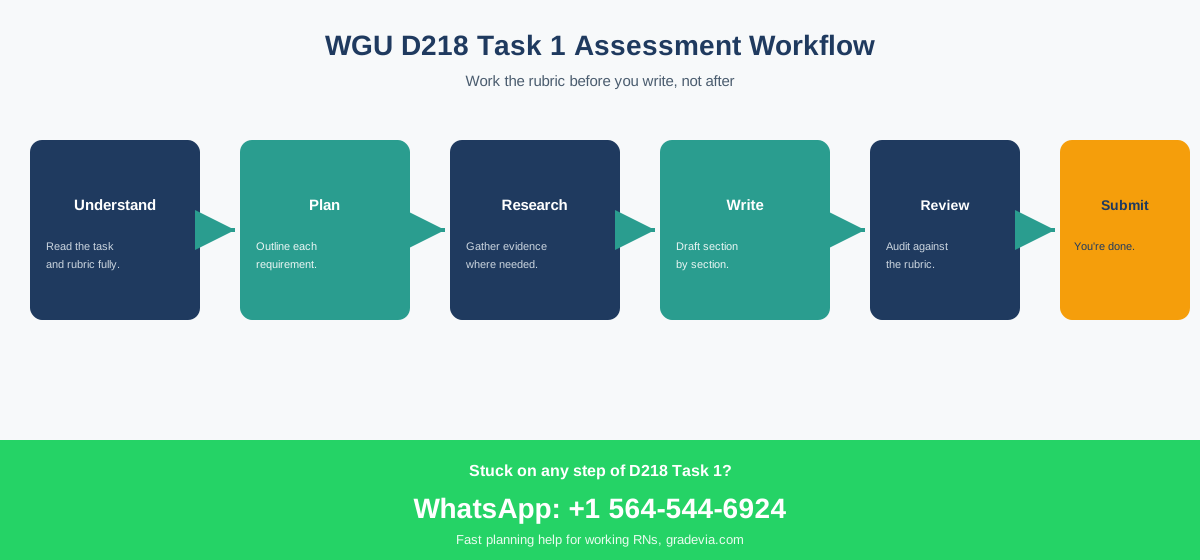
Task instructions lead to rubric criteria, which lead to what the evaluator is actually asking, which leads to the evidence or examples needed, which leads to a draft response, which leads to a rubric audit.
For every criterion, identify five things: the action verb, the topic, the required explanation, the evidence or example needed, and the level of detail expected.
Pay close attention to the verb. “Identify” generally asks for less depth than “explain,” which asks for less than “discuss” or “analyze.” A response that only identifies something when the rubric asked you to explain it is answering a different, easier question than the one being graded. Don’t assume any specific verb applies to your task unless you’ve confirmed it in your current rubric.
How to Break Down D218 Task 1
Step 1, read the entire task. Don’t skim, don’t start with the part that seems most familiar.
Step 2, highlight the action words. These tell you the depth of response each part actually needs.
Step 3, turn each requirement into a question. “Discuss two strategies” becomes “what two strategies will I discuss, and why these two?”
Step 4, identify what information you need. Personal experience, a specific example, a brief explanation, note what each part actually calls for.
Step 5, gather supporting evidence if required. Not every part of this task needs a citation, some genuinely call for personal reflection instead.
Step 6, create a rough outline. Even three or four bullet points per requirement saves real time later.
Step 7, draft each section. Write with the requirement open next to you, not from memory of what you read an hour ago.
Step 8, compare the draft against the rubric. Criterion by criterion, not as a general read-through.
Step 9, check citations and references if your response includes any, matching every in-text citation to a reference entry.
Step 10, proofread and submit.
How to Create a D218 Task 1 Outline
This is a Gradevia planning framework, not an official WGU template, use it to organize your own thinking before you draft.
Requirement 1: What is being asked? Main point: Supporting explanation: Example or personal experience: Citation if required:
Requirement 2: What is being asked? Main point: Supporting explanation: Example or personal experience: Citation if required:
Copy this structure for every requirement your current task lists.
Looking for a downloadable D218 Task 1 template or worksheet? Contact Gradevia and we’ll send you the planning worksheet in whatever format works for your workflow.
How to Approach D218 Task 1 When You’re Short on Time
A 60-Minute D218 Planning Strategy
This timing is a Gradevia productivity suggestion, not a WGU requirement, and it won’t fit every schedule exactly.
- 10 minutes, read the task instructions straight through
- 10 minutes, read the rubric and note the action verb in each criterion
- 10 minutes, turn each requirement into a direct question
- 15 minutes, brainstorm your own resilience strategies and draft goal ideas
- 15 minutes, build a rough outline from what you’ve gathered
A 2-Hour D218 Writing Strategy
- 20 minutes, review your outline and fill in gaps
- 60 minutes, draft your full response section by section
- 20 minutes, check your draft against the rubric line by line
- 20 minutes, proofread and confirm formatting
This won’t guarantee a specific completion time, everyone’s writing pace differs, but breaking the work into blocks tends to feel far more manageable than staring at one long open document.
D218 Task 1 and Intrapersonal Leadership
Intrapersonal leadership is essentially leadership turned inward, understanding yourself well enough to manage your own professional behavior before you try to influence anyone else’s. That includes recognizing your own strengths and weaknesses honestly, managing how you show up under pressure, and setting a real direction for your own development rather than drifting through your career reactively.
D218 Task 1 asks you to practice this directly. Naming a genuine weakness in how you currently handle stress, rather than a safe, generic one, and then building a real goal around it, is intrapersonal leadership in miniature. Only connect this concept to a specific rubric requirement once you’ve confirmed it applies to your current task.
How to Use Nursing Examples
A useful example in this task is specific, professional, and clearly connected to the point you’re making. Compare these two approaches:
Weak: “I am a resilient nurse.”
Stronger: “After a particularly difficult shift involving a patient death, I used a ten-minute debrief with my charge nurse before driving home, a habit that’s helped me process difficult events instead of carrying them into the next shift.”
The second version names a specific situation, a specific behavior, and a specific outcome. That’s what makes it demonstrate reasoning instead of just asserting a trait. Don’t manufacture an example that didn’t happen, use a real one from your own practice, even a small one.
How to Support Your D218 Task 1 With Evidence
Not every part of this task needs outside sources, some of it is genuinely personal reflection. Where evidence does strengthen your response, follow this chain: claim, evidence, explanation, connection.
For example: Nurses who build regular recovery practices into their routine report lower burnout over time (claim, supported by a citation). This matters because unmanaged burnout affects both nurse retention and patient safety (explanation). For my own practice, that means treating my post-shift decompression time as non-negotiable rather than optional (connection back to your specific goal).
Don’t add a citation simply to make the paper look more academic, if a sentence is genuinely personal reflection, it doesn’t need one.
D218 Task 1 Research Strategy
If your version of the task calls for outside sources, search by concept rather than by task name. Start with your WGU Library, then CINAHL, PubMed, Google Scholar, or professional nursing organizations if you need more.
Use search operators to narrow results:
- AND to combine concepts, nursing leadership AND professional development
- OR to capture synonyms, nurse self-awareness OR nurse self-care AND leadership
- Quotation marks for an exact phrase
Searching “D218 Task 1 answers” or “D218 Task 1 pdf free download” instead returns outdated forum posts and files that may not match your current course version, not usable evidence for your own reflection.
D218 Task 1 Example: How to Use Examples Correctly
A useful WGU D218 Task 1 example should show organization, depth, a clear connection to the requirement, professional tone, and honest reasoning, not something to copy into your own submission.
Illustrative example only, not an official WGU answer, and not something to submit as your own work.
Resilience and self-care: “Two strategies I use to support my resilience are protecting a consistent sleep window even on rotating shifts, and using a short walk before entering the building to mentally separate home from work. The walk specifically helps me arrive present rather than distracted, which I’ve noticed affects how I communicate with patients in the first hour of a shift.”
Professional development goal: “Over the next eight weeks, I will protect a 20-minute wind-down period after every shift by leaving my phone in another room, tracking adherence in a simple weekly log, with the goal of completing at least four out of five shifts each week.”
Notice the goal is specific, measurable through the weekly log, realistic given an existing habit, tied directly to the resilience strategy above it, and bounded by a clear timeframe, the SMART elements aren’t stated outright, they’re built into the goal itself.
D218 Task 1 Rubric vs. Example vs. Template
| Resource | What It Helps With |
|---|---|
| D218 Task 1 Guide (this page) | Understanding the assessment overall |
| D218 Task 1 Rubric Breakdown | Understanding evaluation criteria in detail |
| D218 Task 1 Example | Seeing how the reasoning process works |
| D218 Task 1 Template | Organizing your own response before drafting |
| D218 Task 1 Help | Getting personalized academic support |
| D218 Revision Help | Addressing evaluator feedback after resubmission |
Gradevia will continue building out more detailed resources for each of these specific needs as this D218 content grows, this page is the starting point for understanding Task 1 as a whole.
Common WGU D218 Task 1 Mistakes
- Mistake 1, starting to write before understanding the rubric. It happens because the deadline feels closer than the reading. It matters because you end up retrofitting a reflection to a rubric it wasn’t built for. Fix it by breaking the rubric into questions first.
- Mistake 2, answering the general topic instead of the actual requirement. It happens when “resilience” as a subject feels broad enough to write about loosely. It matters because evaluators grade the specific requirement, not the general theme. Fix it by rereading the exact wording of each criterion before drafting.
- Mistake 3, being too vague. It happens because vague statements are faster to write than specific ones. It matters because specificity is usually what separates a passing response from a returned one. Fix it by replacing every general statement with a concrete detail from your own experience.
- Mistake 4, providing examples without explaining their relevance. It happens when an example feels self-explanatory to the person who lived it. It matters because the evaluator wasn’t there, the connection has to be written out. Fix it by adding one sentence after every example explaining exactly what it demonstrates.
- Mistake 5, using unsupported claims. It happens when a statement feels obviously true. It matters because factual claims still need support even in a reflective assignment. Fix it by separating personal reflection, which doesn’t need a citation, from factual claims, which do.
- Mistake 6, adding citations without integrating the evidence. It happens when a source gets dropped in to look academic. It matters because an uninterpreted citation doesn’t demonstrate understanding. Fix it by following the claim, evidence, explanation, connection chain every time you cite something.
- Mistake 7, ignoring evaluator language. It happens when a student assumes they already know what a familiar-sounding term means. It matters because rubric language often carries a specific, narrower meaning than its everyday use. Fix it by treating every rubric term as something to define precisely, not assume.
- Mistake 8, writing far more than necessary. It happens because more feels safer. It matters because length isn’t the same as depth, and unfocused length can actually bury your strongest points. Fix it by cutting anything that doesn’t map directly to a rubric requirement.
- Mistake 9, treating an example as something to copy. It happens because a finished example feels like a shortcut. It matters because copied structure or language raises real academic integrity concerns, even from an illustrative source. Fix it by using examples to understand the reasoning process, then writing your own from scratch.
- Mistake 10, failing to perform a final rubric audit. It happens because after a full draft, you’re ready to be done. It matters because this single step catches most preventable revisions. Fix it by treating the final audit as non-negotiable.
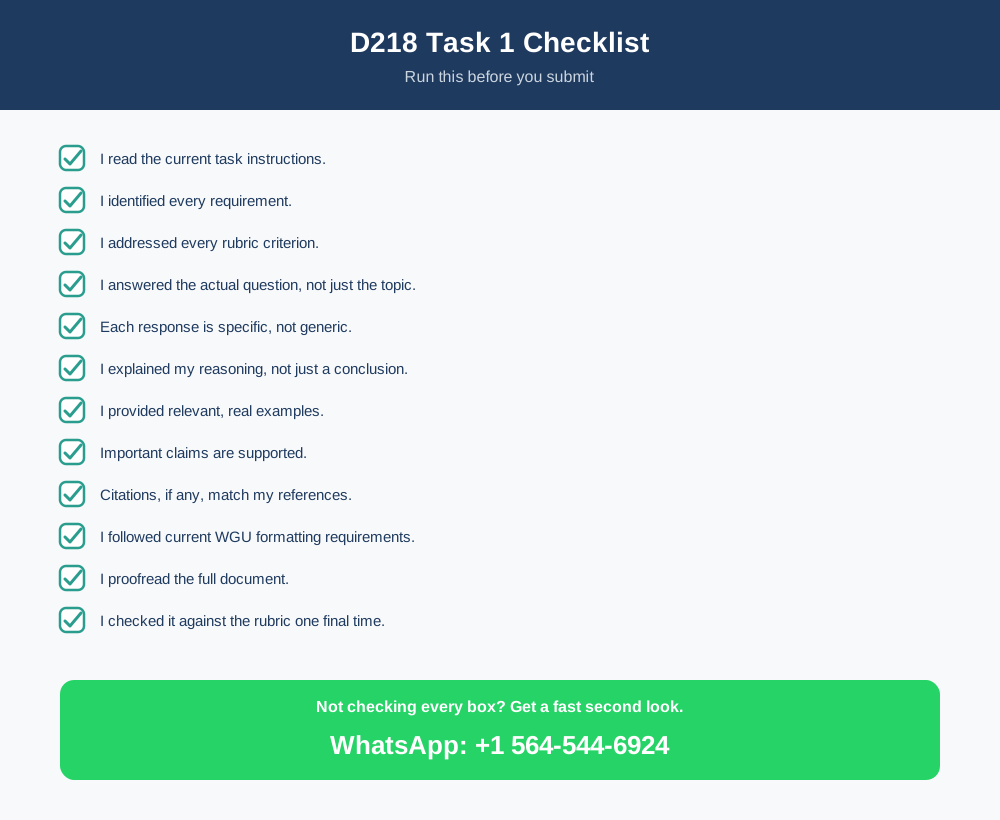
D218 Task 1 Final Submission Checklist
Instructions
- I read the current task instructions.
- I identified every requirement.
Rubric
- I addressed every rubric criterion.
- I answered the actual question, not just the general topic.
Content
- Each response is specific, not generic.
- I explained my reasoning, not just stated a conclusion.
- I provided relevant, real examples where appropriate.
Evidence
- Important claims are supported.
- Any sources used are credible.
- Citations are correctly placed and matched to references.
Formatting
- I followed my current WGU formatting requirements.
- References, if any, are complete.
Quality
- I proofread the full document.
- I checked it against the rubric one final time.
This is a Gradevia checklist, compare it against your own current WGU requirements before submitting.
What If WGU Returns D218 Task 1?
A returned assessment doesn’t mean starting over from a blank page.
- Read the evaluator feedback carefully.
- Identify the specific rubric criterion it’s tied to.
- Locate the relevant section in your submission.
- Determine exactly what the evaluator says is missing.
- Compare your response against the rubric language for that criterion.
- Decide whether the issue is explanation, evidence, clarity, relevance, or something else.
- Revise your own work with that specific gap in mind.
- Perform another full rubric audit before resubmitting.
There’s no guarantee this process results in a passing outcome on any given attempt, but it’s the most reliable way to make real progress on a resubmission instead of guessing.
D218 Task 1 returned for revision? Gradevia can help you understand the evaluator feedback and identify what specifically needs attention in your own draft.
How Gradevia Can Help With D218 Task 1
Working Full-Time and Stuck on WGU D218 Task 1?
You don’t necessarily need someone to write your assessment. You may simply need someone to help you figure out exactly what WGU is asking and how to organize your own reflection around it, especially when you’re trying to do that between shifts instead of during a quiet afternoon.
Services include:
- D218 Task Breakdown, understanding exactly what your current instructions are asking
- Rubric Interpretation, turning confusing language into a practical checklist
- Research Guidance, identifying appropriate strategies and credible source types where evidence is needed
- Outline Development, organizing your own ideas into a logical structure
- Draft Review, feedback on organization, clarity, evidence integration, and rubric alignment
- APA Review, identifying citation and reference issues
- Revision Support, help understanding evaluator feedback and planning next steps
- One-on-One Academic Coaching, personalized support built around a working RN’s actual schedule
📱 Working full-time and stuck on WGU D218 Task 1? Get personalized academic support so you can use your limited study time more efficiently. Message Gradevia on WhatsApp at +1 564-544-6924. No long email chains, no waiting days for a reply, most students hear back the same day.
Using D218 Task 1 Examples and Templates Responsibly
Everything on this page, the outline, the template, the illustrative example, exists to help you understand and organize your own thinking, not to be copied into a submission. Complete your own assessment, use examples for learning, use templates for planning, cite sources properly, and follow WGU’s academic policies. Gradevia doesn’t provide ready-to-submit answers, fabricate sources, or encourage submitting someone else’s work, the goal is a student who genuinely understands what they wrote and why.
Frequently Asked Questions About WGU D218 Task 1
- What is WGU D218 Task 1? It’s commonly known as the Personal Development Plan, a written assessment asking students to reflect on resilience and self-care strategies and connect them to specific professional development goals. Confirm the exact structure against your current task instructions.
- What is WGU D218? D218, Intrapersonal Leadership and Professional Growth, is an RN-to-BSN course focused on professional identity, leadership theory, and standards of professionalism.
- What does D218 Task 1 involve? Generally, two connected parts: identifying resilience and self-care strategies relevant to your professional practice, then building specific, often SMART-formatted, goals that grow directly from those strategies.
- How should I approach D218 Task 1? Read the full task and rubric before writing anything, break each requirement into a direct question, outline your response, draft with the rubric open beside you, and finish with a full rubric audit before submitting.
- How do I use the D218 Task 1 rubric? Identify the action verb, topic, required explanation, and evidence needed for every criterion before you draft, then compare your finished response against that same list.
- Is there a WGU D218 Task 1 template? Gradevia offers a planning worksheet you can use to organize your own response before drafting, it’s a planning tool, not an official WGU document. It’s not a D218 Task 1 pdf free download of finished answers, it’s a blank structure you fill in yourself.
- Where can I find a WGU D218 Task 1 example? An original, clearly labeled illustrative example is included above. Treat any full student submission you find online cautiously, course versions change, and copying structure or language from someone else’s paper is an academic integrity risk regardless of how closely it matches your assignment.
- Are WGU D218 Task 1 answers or an answer key available anywhere reliable? No verified official answer key exists for this task, and searching for one, or for a “D218 Task 2 answer key,” generally returns outdated or unofficial material that may not match your current rubric. Working through your own reflection with a clear planning framework tends to produce a stronger, more defensible submission than trying to adapt someone else’s answers.
- What comes after D218 Task 1? D218 Task 2 generally continues the leadership focus of the course with a reflection on leadership skills and mindset. Confirm the specific requirements against your current course, since structure can vary by version. This same rubric-first approach applies whether you’re working through a full performance assessment like this one or a shorter WGU orientation task example earlier in your program.
- What should I do if WGU returns my D218 Task 1? Read the feedback, identify the specific rubric criterion it addresses, locate the affected section, revise with that gap in mind, and complete a full rubric audit before resubmitting.
- Can someone help me understand D218 Task 1? Yes. Legitimate academic support, rubric breakdowns, outline help, draft review, and revision coaching, is different from having someone complete the assignment for you. Gradevia focuses on helping you understand and strengthen your own work.
Final Thoughts
D218 Task 1 gets easier the moment you stop treating it as a vague personal essay and start treating it as two specific, connected requirements, a real resilience and self-care reflection, and goals that visibly grow out of it. Specificity beats length, and a rubric checked before you draft saves far more time than one checked only after.
Working full-time and stuck on WGU D218 Task 1? Message Gradevia on WhatsApp at +1 564-544-6924, tell us where you’re stuck, and we’ll help you find the next step. If you’re also working through nursing research coursework, our WGU D219 complete guide covers that side of the RN-to-BSN curriculum, and if you’re balancing an MBA track alongside your nursing degree, our WGU C200 Task 1 examples breakdown may help there too.
References
- Fiske, E., Martin, S., & Luetkemeyer, J. (2024). Nursing resilience: An evidence-based approach to supporting frontline nurses. JONA: The Journal of Nursing Administration, 54(10), 554-560. https://doi.org/10.1097/NNA.0000000000001488
- Han, P., Duan, X., Jiang, J., Zeng, L., Zhang, P., & Zhao, S. (2023). Experience in the development of nurses’ personal resilience: A meta-synthesis. Nursing Open, 10(5), 2780-2792. https://doi.org/10.1002/nop2.1556
- Petersen, J., Wendsche, J., & Melzer, M. (2023). Nurses’ emotional exhaustion: Prevalence, psychosocial risk factors and association to sick leave depending on care setting: A quantitative secondary analysis. Journal of Advanced Nursing, 79(1), 182-193. https://doi.org/10.1111/jan.15471
- Dall’Ora, C., Ejebu, O.-Z., Ball, J., & Griffiths, P. (2023). Shift work characteristics and burnout among nurses: Cross-sectional survey. Occupational Medicine, 73(4), 199-204. https://doi.org/10.1093/occmed/kqad046
- Hinkley, T., Kuhl, L., & Liebig, D. (2023). Professional identity in nursing: The role of efficacy in navigating the work environment. Nurse Leader, 21(2), 174-178. https://doi.org/10.1016/j.mnl.2022.12.006