
Blog
NURS 6501 Week 6 Midterm Exam: 2026 Review Guide for Working Walden MSN Nurses

Updated on: Sep 26, 2026
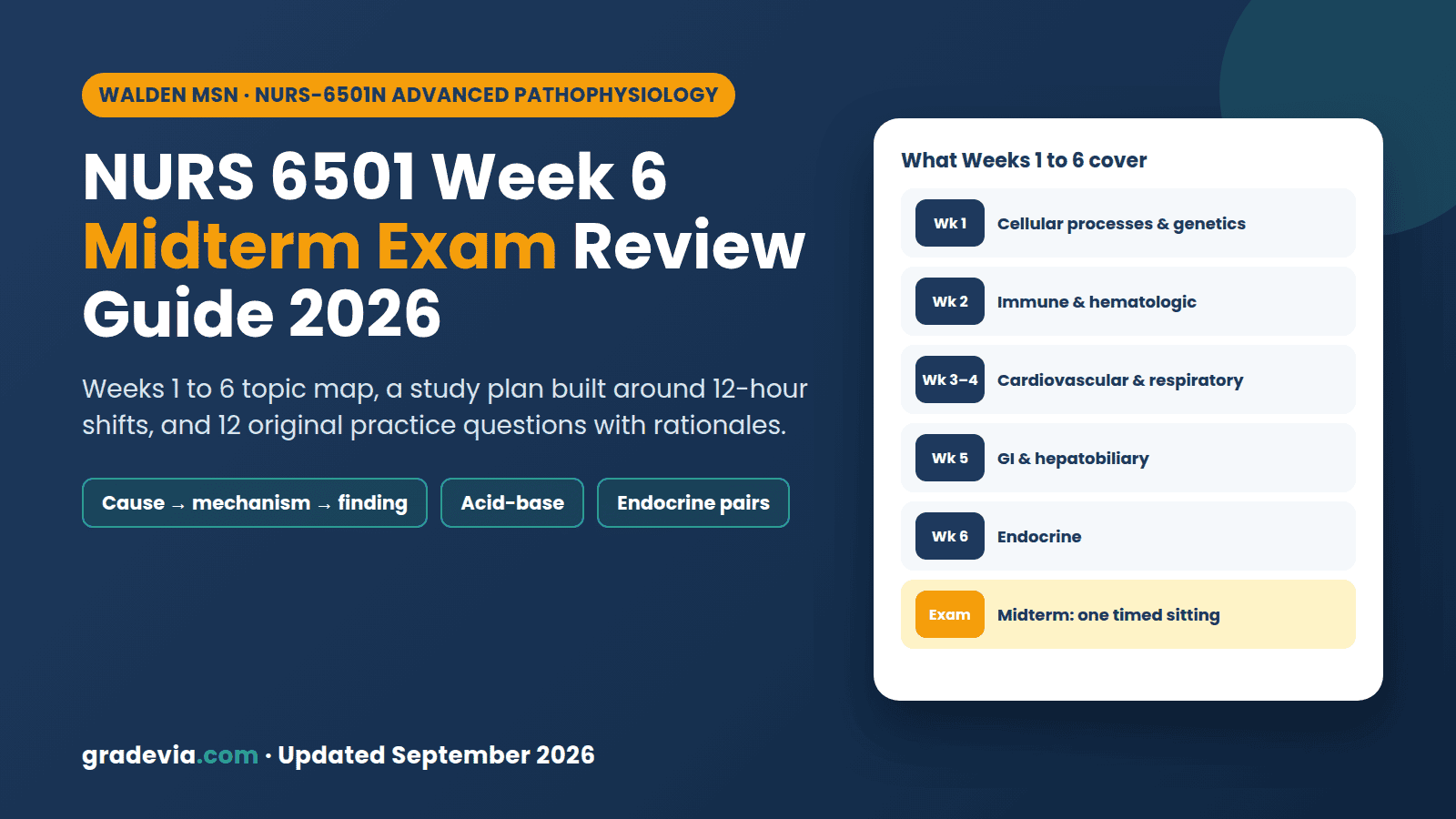
Quick answer: The NURS-6501N Week 6 Midterm Exam is the first major exam in Walden University’s Advanced Pathophysiology course. In recent course versions it covers Weeks 1 to 6: cellular processes and genetics, immune and hematologic disorders, cardiovascular and respiratory disorders, gastrointestinal and hepatobiliary disorders, and endocrine disorders. Expect scenario-based multiple-choice questions that ask why a disease produces its signs and lab findings, completed in one timed sitting. The best preparation for a working nurse is steady weekly review of each module, the Knowledge Checks, and mechanism-focused practice questions, not a last-minute cram.
If you are working full time while earning your Walden MSN, you are probably fitting pathophysiology into lunch breaks, the drive home, and the day after a stretch of 12-hour shifts. This NURS 6501 midterm exam review guide for Weeks 1 to 6 is built for that schedule. It covers what the exam tests in 2026, a topic map for every week, a realistic study plan, 12 original practice questions with rationales, and exam-day steps that protect your score. For more Walden course help, browse our Walden University nursing guides.
Need Help Completing Your NURS-6501N Week 6 Midterm Exam? WhatsApp Us: +1 564-544-6924
What is the NURS 6501N midterm exam?
NURS 6501 (listed in the classroom as NURS-6501N) is Advanced Pathophysiology, one of the “3 Ps” (with advanced pharmacology and advanced health assessment) required in Walden’s MSN nurse practitioner specializations. The NURS 6501N midterm exam sits in Week 6 and tests the first half of the course.
What to confirm in your own Week 6 exam instructions (these details can change by term, so the classroom is always the authority):
| Item | What to check |
|---|---|
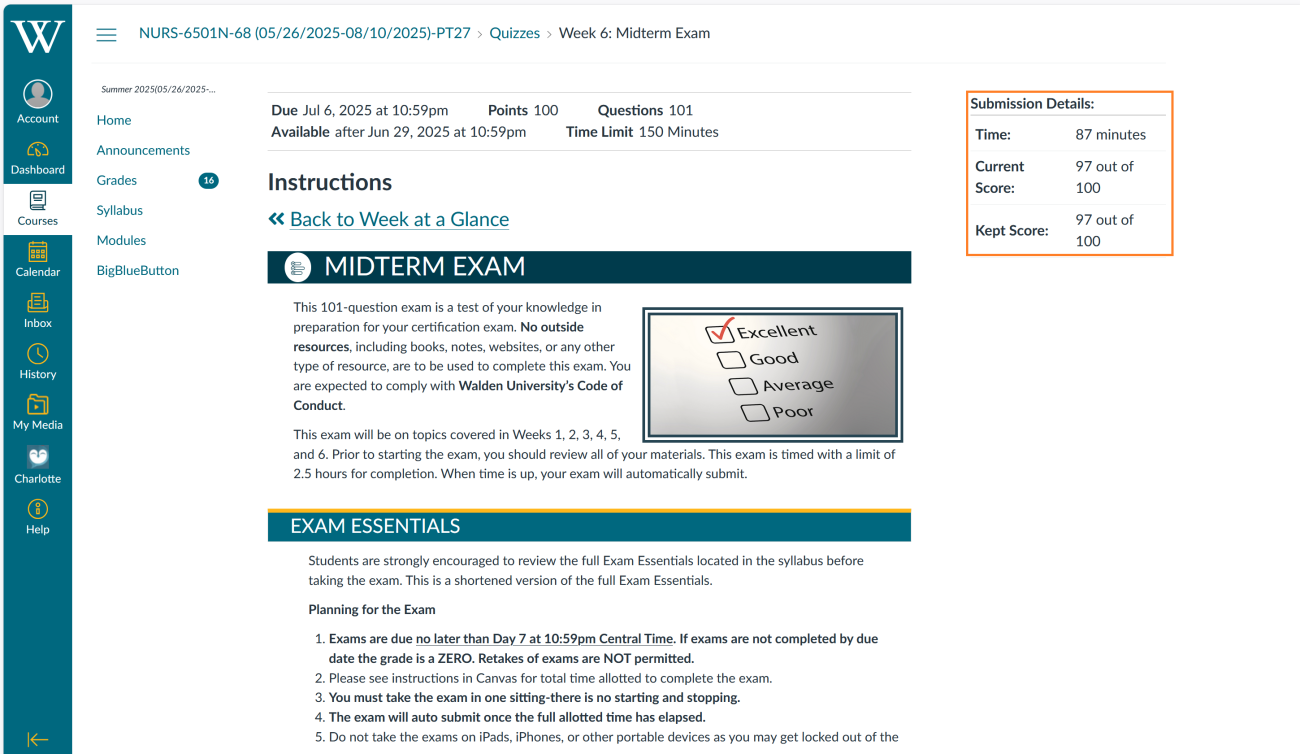
| Number of questions | Students commonly report about 100 multiple-choice items |
| Time limit | One timed sitting; note the exact minutes |
| Deadline | Day and time in your term’s time zone |
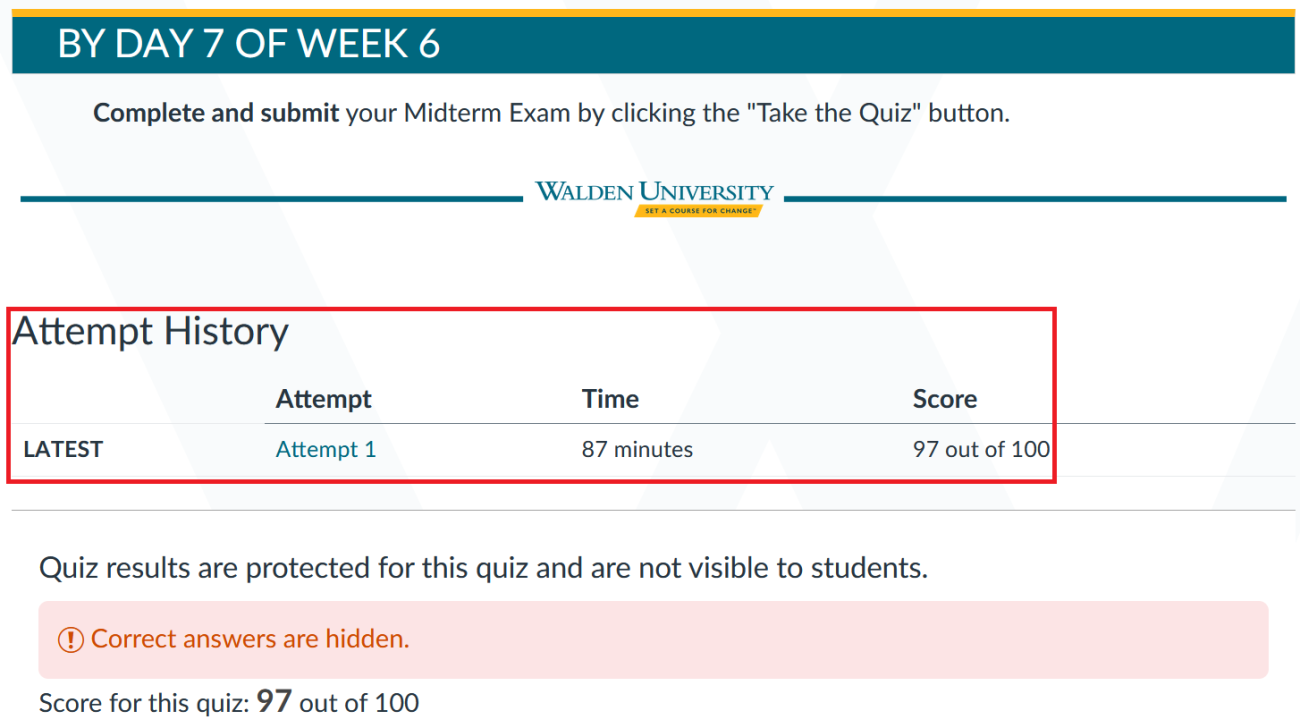
| Attempts | Usually one attempt; confirm in the syllabus |
| Rules | Whether resources are allowed (typically not), proctoring, and browser requirements |
| Grade weight | The midterm’s share of your course grade and the minimum grade your program requires |
Tip for shift workers: Look at the deadline in Week 4 and put your exam block on your calendar before you pick up extra shifts. Do not take a 100-question pathophysiology exam at the end of a night shift.
NURS 6501 midterm exam review guide: Weeks 1 to 6 topic map
Recent versions of NURS 6501 organize the first half of the course as shown below. Module titles and weeks can shift between terms, so match this list to your Module overviews.
| Week | Module focus | High-yield concepts to master |
|---|---|---|
| 1 | Cellular processes and the genetic environment | Cellular adaptation (atrophy, hypertrophy, hyperplasia, metaplasia, dysplasia), cell injury, necrosis vs. apoptosis, fluid and electrolytes, acid-base basics, genetic inheritance patterns, epigenetics, cancer genetics (oncogenes vs. tumor suppressor genes) |
| 2 | Immune and hematologic disorders | Innate vs. adaptive immunity, inflammation and mediators, hypersensitivity types I to IV, autoimmunity, immunodeficiency, anemias (iron deficiency, B12, folate, sickle cell), clotting disorders, leukemia basics |
| 3 | Cardiovascular and respiratory disorders | Atherosclerosis, hypertension, heart failure (left vs. right, reduced vs. preserved ejection fraction), MI, shock; asthma, COPD, pneumonia, pulmonary embolism, ARDS |
| 4 | Cardiovascular and respiratory application | Case-based reasoning linking mechanisms to symptoms, ABG interpretation, gas exchange |
| 5 | Gastrointestinal and hepatobiliary disorders | GERD, peptic ulcer disease and H. pylori, inflammatory bowel disease, pancreatitis, cirrhosis and portal hypertension, hepatitis, gallbladder disease |
| 6 | Endocrine disorders | Feedback loops, type 1 vs. type 2 diabetes, DKA vs. HHS, thyroid disorders (Graves, Hashimoto), adrenal disorders (Cushing, Addison), SIADH vs. diabetes insipidus |
Neurological, musculoskeletal, renal, and reproductive content usually appears after the midterm in recent course versions. If your Module overviews differ, follow them.
The one skill the exam rewards
Nearly every NURS 6501 advanced pathophysiology midterm exam question at Walden University rewards the same skill: tracing a chain from cause to mechanism to clinical finding. When you study any disorder, write it as a chain:
Trigger (for example, autoimmune destruction of beta cells) → mechanism (absolute insulin deficiency, lipolysis, ketone production) → findings (hyperglycemia, metabolic acidosis, Kussmaul respirations, fruity breath)
If you can draw the chain from memory, you can answer the question no matter how the stem is worded.
A 6-week study plan built around 12-hour shifts
This plan keeps pace with the course so Week 6 is review, not first exposure.
| Week | Work days (20 to 30 minutes) | Days off (about 2 hours) |
|---|---|---|
| 1 | Flashcards: cellular adaptations, necrosis vs. apoptosis, electrolytes | Read the assigned chapters; draw 5 cause-to-finding chains |
| 2 | 10 practice questions on immunity and anemias | Build a table of hypersensitivity types I to IV and an anemia comparison chart |
| 3 | Flashcards: heart failure, asthma vs. COPD | Complete the Knowledge Check; review every missed item’s mechanism |
| 4 | 10 ABG and cardiopulmonary questions a day | Draw chains for MI, shock, PE, and pneumonia; revisit Weeks 1 to 2 |
| 5 | Flashcards: GI and liver disorders | Cirrhosis and portal hypertension chain; pancreatitis and PUD comparison |
| 6 | Endocrine flashcards plus mixed review | Two timed 50-question mixed sets; final review of your weakest two topics |
Make your commute count: record 60-second voice notes explaining a mechanism aloud and play them back while driving. Explaining is a stronger memory tool than rereading.

NURS 6501N Week 6 midterm exam questions: 12 original practice items
These NURS 6501N Week 6 midterm exam questions are original practice items written by Gradevia in the style of mechanism-focused pathophysiology questions. They are not items from the Walden exam. Cover the answer, commit to a choice, then read the rationale.
1. Cellular adaptation. A patient with long-standing hypertension has a thickened left ventricular wall caused by enlarged existing myocytes. Which adaptation is this?
A. Atrophy
B. Hypertrophy
C. Hyperplasia
D. Metaplasia
Answer: B. Cardiac myocytes have very limited ability to divide, so increased workload causes an increase in cell size (hypertrophy) rather than cell number.
2. Metaplasia. In a long-term smoker, the normal columnar epithelium of the bronchi is replaced by stratified squamous epithelium. What is the most important feature of this change?
A. It is always malignant
B. It is reversible if the stimulus is removed
C. It results from apoptosis
D. It increases mucociliary clearance
Answer: B. Metaplasia is an adaptive, potentially reversible replacement of one cell type with another. It reduces protective clearance and can progress to dysplasia if exposure continues.
3. Potassium in CKD. A patient with stage 4 chronic kidney disease has a serum potassium of 6.2 mEq/L. What is the primary mechanism?
A. Failure of the Na+/K+ ATPase pump from low ATP
B. Decreased renal excretion of potassium from reduced GFR
C. Excess aldosterone secretion
D. Increased gastrointestinal potassium loss
Answer: B. The kidneys eliminate most potassium. As functioning nephrons and GFR decline, excretion falls and potassium accumulates. Aldosterone increases potassium excretion, and GI loss would lower potassium.
4. Hypersensitivity. Minutes after a bee sting, a patient develops hives, wheezing, and hypotension. Which mechanism explains this reaction?
A. IgE bound to mast cells triggers histamine release
B. IgG antibodies destroy red blood cells
C. Immune complexes deposit in vessel walls
D. Sensitized T cells release cytokines after 48 hours
Answer: A. This is a type I (immediate, IgE-mediated) hypersensitivity reaction. Options B, C, and D describe types II, III, and IV.
5. Iron deficiency anemia. Which laboratory pattern is most consistent with iron deficiency anemia?
A. High MCV, low B12
B. Low MCV, low ferritin, high TIBC
C. Normal MCV, high reticulocytes
D. High MCV, low folate
Answer: B. Iron deficiency produces microcytic, hypochromic red cells. Low ferritin reflects depleted stores, and total iron-binding capacity rises as the body tries to capture more iron.
6. Pernicious anemia. A patient has macrocytic anemia with numbness and tingling in the feet. What is the most likely cause?
A. Folate deficiency
B. Lack of intrinsic factor causing B12 malabsorption
C. Chronic blood loss
D. Hemolysis
Answer: B. Both B12 and folate deficiency cause macrocytic anemia, but neurological symptoms point to B12. In pernicious anemia, autoimmune damage to gastric parietal cells reduces intrinsic factor, which is needed to absorb B12.
7. Left-sided heart failure. A patient with heart failure with reduced ejection fraction reports orthopnea and has crackles in both lungs. What causes these findings?
A. Increased systemic venous pressure
B. Backup of blood into the pulmonary circulation from a failing left ventricle
C. Right ventricular hypertrophy
D. Decreased pulmonary capillary pressure
Answer: B. When the left ventricle cannot eject effectively, pressure rises in the left atrium and pulmonary veins, pushing fluid into the alveoli. Systemic congestion (edema, JVD) is more typical of right-sided failure.
8. Emphysema. A 38-year-old nonsmoker is diagnosed with panlobular emphysema. Which mechanism is most likely?
A. Alpha-1 antitrypsin deficiency allowing protease destruction of alveolar walls
B. IgE-mediated bronchospasm
C. Surfactant deficiency
D. Pulmonary embolism
Answer: A. Alpha-1 antitrypsin normally inhibits elastase. Without it, alveolar walls are destroyed, elastic recoil is lost, and air becomes trapped, often at a young age.
9. Acid-base. After three days of persistent vomiting, which acid-base disturbance is most likely?
A. Metabolic acidosis with respiratory compensation
B. Respiratory acidosis
C. Metabolic alkalosis with compensatory hypoventilation
D. Respiratory alkalosis
Answer: C. Vomiting removes hydrochloric acid from the stomach, raising bicarbonate. The lungs compensate by slowing breathing to retain CO₂.
10. Cirrhosis. Which two mechanisms best explain ascites in cirrhosis?
A. Portal hypertension and decreased albumin synthesis
B. Increased albumin and low portal pressure
C. Right heart failure and hyperkalemia
D. Excess bile production and pancreatitis
Answer: A. Scarring raises pressure in the portal system, forcing fluid into the peritoneal cavity, while reduced albumin production lowers oncotic pressure that normally holds fluid in vessels.
11. DKA. A patient with type 1 diabetes presents with deep, rapid respirations and a fruity breath odor. What explains the breathing pattern?
A. Hypoglycemia
B. Respiratory compensation for ketone-driven metabolic acidosis
C. Pulmonary edema
D. Respiratory alkalosis from anxiety
Answer: B. Absolute insulin deficiency drives lipolysis and ketone production. The resulting metabolic acidosis triggers Kussmaul respirations to blow off CO₂.
12. SIADH. Which finding pattern supports syndrome of inappropriate antidiuretic hormone?
A. Hypernatremia with dilute urine
B. Hyponatremia with inappropriately concentrated urine
C. Hyperkalemia with hypotension
D. Hyperglycemia with polyuria
Answer: B. Excess ADH causes water retention, diluting serum sodium while the urine stays concentrated. Diabetes insipidus is the opposite pattern: dilute urine and rising sodium.
Looking for NURS 6501N Week 6 midterm exam answers or a PDF?
Searches for “NURS 6501N Week 6 midterm exam answers” and “NURS 6501N Week 6 midterm exam PDF” usually lead to files sold as the “actual exam.” Before you download one, know three things:
- Many are outdated or wrong. These files are often years old, assembled from memory, and reposted without checking. Widely shared sets still attribute hyperkalemia in CKD to sodium-potassium pump failure instead of reduced renal excretion, which shows how easily errors spread.
- They do not match the way the exam is built. Scenario stems change, and memorized letters do not transfer to a new question about the same mechanism.
- Using leaked exam content violates Walden’s academic integrity policy, and the consequences can include failing the course, which can delay your MSN and any NP track plans.
What works better: your Knowledge Check results (they show exactly which modules you are weak in), the assigned chapters, original practice questions with rationales like the ones above, and a short 1:1 review of your weakest topics.
Book a 1:1 NURS 6501 midterm review session for weak Weeks 1-6 topics on WhatsApp
Knowledge Check scores telling you Module 2 or endocrine is your weak spot? Book a 1:1 review session on WhatsApp and we will walk through the mechanisms you keep missing, with fresh practice questions, at a time that fits your shifts.
Common mistakes on the NURS 6501 midterm exam in 2026
| Mistake | Better approach |
|---|---|
| Memorizing disease lists | Learn each disorder as a cause-to-mechanism-to-finding chain |
| Mixing up look-alike conditions | Study in pairs: DKA vs. HHS, SIADH vs. DI, Graves vs. Hashimoto, left vs. right HF, asthma vs. COPD |
| Skipping acid-base | Practice ABGs daily in Weeks 3 and 4; they appear across systems |
| Ignoring Knowledge Check misses | Re-learn the mechanism behind every missed item, not just the correct letter |
| Cramming Weeks 1 and 2 at the end | Revisit early modules every week, since cellular and immune concepts underlie everything else |
| Testing after a night shift | Schedule the exam after sleep, in a quiet space, with a stable internet connection |
Exam-day checklist
- Re-read the Week 6 exam instructions for time limit, deadline, and allowed materials
- Use the required browser and a computer that meets the technical requirements
- Block the full time with no interruptions; tell family or roommates
- Read each stem for the question actually being asked (mechanism, finding, or next step)
- Eliminate options that describe the opposite disorder (for example, DI when the stem describes SIADH)
- Watch the clock: leave time to review flagged items if the exam allows it
Searching for a NURS 6051 midterm exam?
Many students type “NURS 6051 midterm exam” when they mean NURS 6501. NURS 6051 is Walden’s nursing informatics course (Transforming Nursing and Healthcare Through Technology), which is built around written assignments rather than a pathophysiology midterm. If you are preparing for the Advanced Pathophysiology midterm, you are in the right place; if you need NURS 6051 help, check your syllabus and our Walden University nursing collection.
Frequently asked questions
What does the NURS 6501 Week 6 midterm exam cover? In recent course versions, the NURS 6501N midterm covers Weeks 1 to 6: cellular processes and genetics, immune and hematologic disorders, cardiovascular and respiratory disorders, gastrointestinal and hepatobiliary disorders, and endocrine disorders. Confirm the exact scope in your Week 6 exam instructions.
How many questions are on the NURS 6501N midterm exam? Students commonly report around 100 multiple-choice questions in a single timed sitting, but the count, time limit, and rules can change by term. Your Week 6 exam instructions are the authority.
Can I find NURS 6501N Week 6 midterm exam answers or a PDF online? Files sold as actual exam answers are often outdated or wrong, and using them violates Walden’s academic integrity policy. Original practice questions with rationales, your Knowledge Check results, and the course text are safer and more effective ways to prepare.
How should a full-time working nurse study for the NURS 6501 midterm? Study in short daily blocks on work days (20 to 30 minutes of flashcards or 10 practice questions) and longer 2-hour blocks on days off, keeping pace with each week’s module instead of cramming in Week 6.
Is there a NURS 6051 midterm exam? Searches for a NURS 6051 midterm exam usually mean NURS 6501. NURS 6051 is Walden’s nursing informatics course, which is built around written assignments rather than a pathophysiology midterm; check your syllabus to confirm.
What textbook helps most for the NURS 6501 midterm? McCance and Huether’s Pathophysiology (9th ed.) is the core text for many advanced pathophysiology courses. Use the edition and chapters listed in your NURS 6501 Learning Resources.
You can pass the NURS 6501 midterm exam in 2026 while working full time
The nurses who do well on this exam are not the ones with the most free time. They are the ones who keep pace week by week, learn mechanisms instead of lists, and fix weak topics early. Use the topic map, follow the plan, work through the practice questions, and ask for help before Week 6 rather than after it.
NURS 6501N Week 6 midterm exam prep support for full-time working Walden MSN nurses
Midterm in days and still working your full schedule? Get NURS 6501 exam prep support built for working nurses: a targeted review of your weakest Weeks 1-6 topics, fresh mechanism-based practice questions, and a final-week plan. Chat on WhatsApp at +1 564-544-6924.
References
Rogers, J. L. (Ed.). (2023). McCance & Huether’s pathophysiology: The biologic basis for disease in adults and children (9th ed.). Elsevier.
Walden University. (n.d.). NURS 6501: Advanced pathophysiology [Course catalog listing]. https://academics.waldenu.edu/catalog/courses/nurs/6501
Gradevia provides coaching and exam preparation support. Practice questions on this page are original and are not items from any Walden University exam. Follow Walden University’s academic integrity policy.